

The potato is one of the Canary Islands’ greatest culinary treasures. First brought from the Andes in the 16th century, the archipelago became one of the earliest European territories where it was cultivated. The volcanic Canarian soil and mild subtropical climate proved perfect, and potatoes quickly became a staple food for islanders. Over time, the Canarian potato developed its own identity, blending history, culture, and tradition.
Varieties of Canarian Potatoes

The Canary Islands are home to 46 recognised native varieties, many of which are exclusive to the region. Among the most valued are:
- Papa Negra – famous for its deep flavour.
- Papa Bonita – brightly coloured and patterned, often in stripes or speckles.
- Papa Negra Yema de Huevo – one of the rarest and most expensive potatoes in the world, sold at auction for over €1,100 per kilo.
- King Edward Potato – introduced from Britain, named after King Edward VII (crowned in 1902). In the Canary Islands, this potato took on a new life, becoming locally known as “chinegua” or “quinegua”, a charming adaptation of the English name into Canarian Spanish pronunciation.
Popularity and Cultural Significance

Canarian potatoes are not just food—they are heritage. Farmers protect and reproduce their traditional seeds with pride, maintaining biodiversity that is rare elsewhere in Europe. Many varieties hold the European Union’s Protected Designation of Origin (PDO) label, ensuring authenticity and preserving local farming traditions.
Fun Facts

- The archipelago is often called a “living museum of potatoes” due to the diversity of varieties.
- The unique flavour of Canarian potatoes comes from the volcanic soil, which is rich in minerals.
- Rare types are cultivated in small plots at high altitudes, sometimes above 1,000 metres.
- The chinegua/quinegua potato is a living example of how language adapts—an English royal name turned into a local word.
Typical Canarian Dishes with Potatoes

No visit to the islands is complete without tasting local potato dishes:
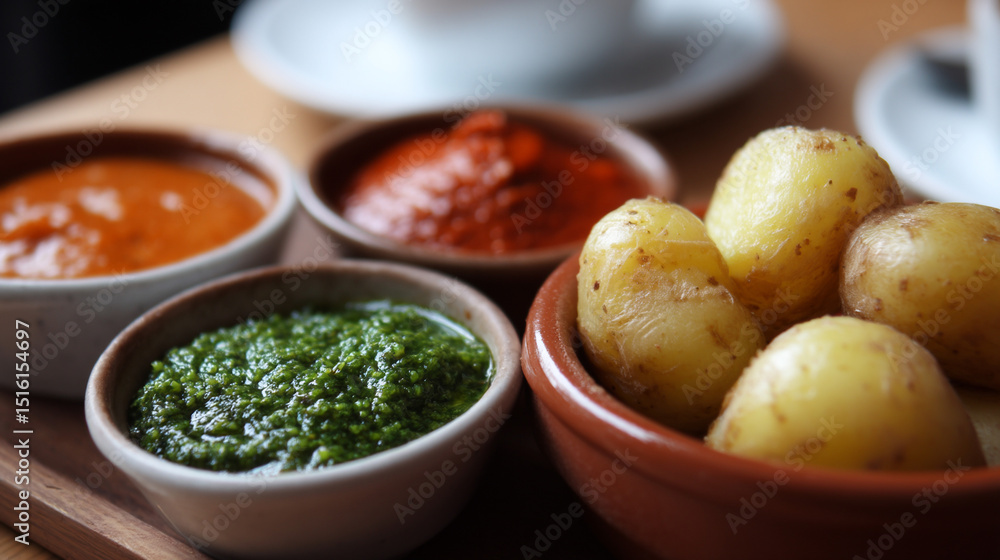
- Papas arrugadas con mojo – the iconic wrinkled potatoes cooked in salt water, served with red or green mojo sauce.
- Ropa Vieja Canaria – a traditional stew of chickpeas, shredded meat, and potatoes.
- Rancho Canario – a rustic, filling mix of potatoes, pasta, chickpeas, and meat.
- Sancocho Canario – salted fish accompanied by potatoes and sweet potatoes, a dish often enjoyed on festive occasions.

The Canarian potato is more than an ingredient—it’s a story of migration, adaptation, and identity. From their South American origins to their transformation on volcanic soil, these potatoes symbolise the islands’ resilience and creativity. Whether you savour papas arrugadas with mojo or discover the amusing tale of the chinegua, you’ll be tasting a piece of Canarian culture.