



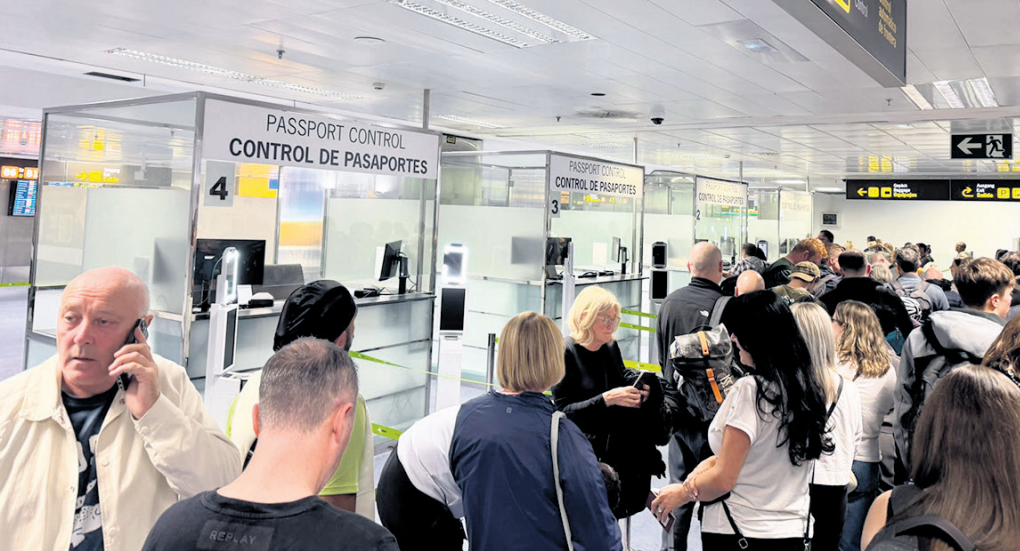
Tenerife South Airport has begun testing the new Entry/Exit System (EES), a European Union technological platform designed to strengthen border controls at the external frontiers of the Schengen area.
The introduction of the system is intended to reduce the long queues that frequently form at the passport-control area. Tenerife South is the principal gateway for tourists arriving on the island—particularly British travellers—and delays have been common whenever several non-Schengen flights land at the same time.
For years, travellers, representatives from the hotel and tourism sector, and local authorities have complained about the “chaotic” situation in the arrivals terminal, where queues can become overwhelming during peak times.
What the new airport system changes
According to the Spanish Ministry of the Interior, the roll-out of the system will be gradual and will not be fully completed until 10 April 2026.
The EES replaces manual passport stamping with an automated digital process that records:
- the passenger’s entry and exit dates, and
- biometric data, such as fingerprints and facial recognition.
The system applies to citizens of non-Schengen countries, meaning third-country nationals, including British passengers.
The Ministry has allocated €83 million to upgrade all Spanish border checkpoints to the new technical standards. The National Police will continue to manage border control tasks, while the Guardia Civil will maintain fiscal and customs-related duties.
What passengers should expect

With the activation of the system at Tenerife South, both local authorities and the British Embassy are advising passengers to arrive at the airport earlier than usual and be prepared for longer passport-control procedures during the initial implementation phase.
Although the objective is to streamline the flow of travellers and eliminate bottlenecks, the first weeks of operation may involve longer waiting times as passengers and staff adapt to the new technology.